December 1, 2025 • Sivam Pillai • 6 minutes read
Research Papers Are Not Supposed to Be Boring
What I learned about clarity, storytelling, and thinking from understanding how great papers are written
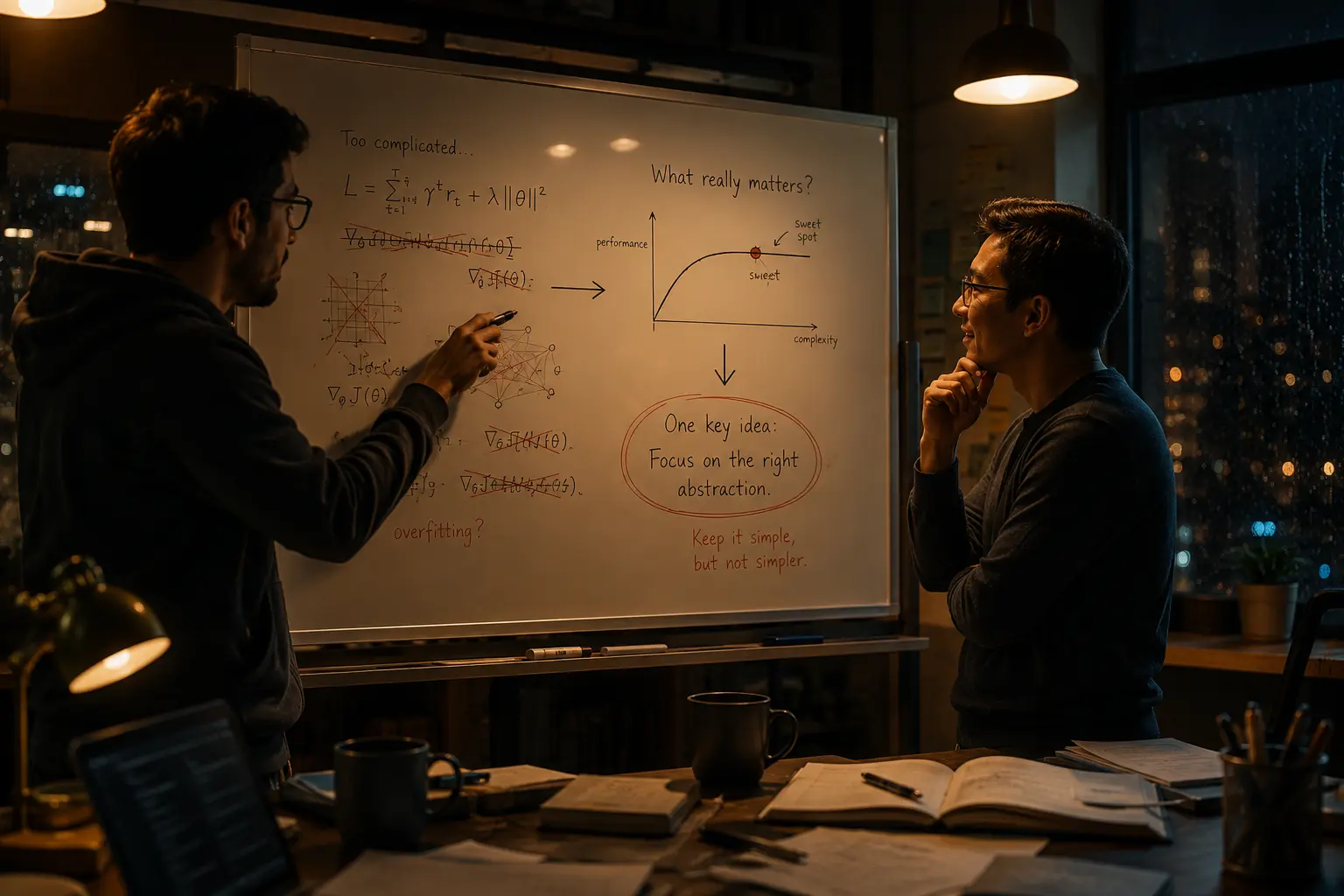
For a long time, I had a very one-dimensional understanding of research papers.
To me, they often felt dense, intimidating, and strangely lifeless. Many of the papers I came across during my early years of reading technical literature were undoubtedly filled with knowledge and intellectual depth. Some of them were groundbreaking even. Yet very few made me want to keep reading.
That always puzzled me.
How could something so intellectually rich feel so difficult to connect with?
Over time, as I read more papers from better journals and researchers, I slowly started realizing something important:
Great research papers do not merely transfer information. They transfer understanding.
The best ones felt surprisingly different. They had clarity. Narrative. Momentum. Sometimes they even felt conversational. Instead of trying to overwhelm the reader with complexity, they carefully guided the reader toward an idea.
That shift completely changed how I started looking at research writing.
Recently, I revisited a wonderful slide deck by Simon Peyton Jones titled How to Write a Great Research Paper. While many of the ideas in it may sound obvious in hindsight, I found the presentation incredibly insightful because it articulated something that many technical people intuitively feel but rarely express clearly.
You can find the original slide deck here: How to Write a Great Research Paper (PDF).
The deck was not really about formatting papers.
It was about communication.
And perhaps more importantly, it was about thinking.
✍️ Writing Is Not the Final Step
One of the biggest insights that stayed with me was this idea:
“Writing papers is a primary mechanism for doing research.” :contentReference[oaicite:1]{index=1}
At first glance, that sounds counterintuitive.
Most people think research happens first and writing happens later. Almost like documentation after the “real work” is complete.
But in practice, writing often is part of the research process itself.
The moment you try to explain an idea clearly, gaps begin to appear. Assumptions become visible. Weak arguments surface. Vague intuitions suddenly demand precision.
Writing forces clarity.
In many ways, some of the deepest thinking happens only when we attempt to communicate an idea to someone else.
I have personally experienced this while writing technical articles and project notes. Ideas that initially felt complete in my head often turned out to be surprisingly underdeveloped once I tried putting them into words.
Sometimes the act of writing does not merely explain the idea.
It discovers the idea.
🎯 Every Great Paper Has One Clear “Ping”
Another concept from the talk that I loved was the idea that every paper should have one clear “ping.” :contentReference[oaicite:2]{index=2}
One central idea.
One reusable insight.
One thing the reader walks away remembering.
This sounds simple, but many technical papers unintentionally dilute themselves by trying to communicate too many things at once. The result is often a paper filled with information but lacking a memorable core.
The slide deck phrases it beautifully:
“You want to infect the mind of your reader with your idea, like a virus.” :contentReference[oaicite:3]{index=3}
Strange metaphor perhaps, but incredibly effective.
The papers we remember are rarely the ones that contain the maximum number of equations or citations. They are usually the ones that leave us with a single sharp insight that changes how we think about a problem.
Clarity scales further than complexity.
📖 The Best Papers Tell Stories
This was probably the most surprising realization for me.
Great research papers are often excellent storytelling systems.
Not fictional storytelling, of course, but intellectual storytelling.
The strongest papers usually follow a very natural narrative flow:
- Here is a problem
- Here is why it matters
- Here is why existing approaches struggle
- Here is the idea
- Here is evidence that it works
That structure feels obvious when stated explicitly, yet many technical documents skip directly into abstraction before the reader even understands why they should care.
Some papers start with compressed terminology, references to prior work, and formal definitions long before building intuition. As a reader, this can feel like entering a movie halfway through.
The slide deck repeatedly emphasizes the importance of examples and intuition before diving into generalization or formalism. :contentReference[oaicite:4]{index=4}
That point stayed with me because the best teachers, engineers, and communicators I have encountered tend to do exactly this naturally.
They first help you see the problem.
Only then do they explain the machinery behind it.
👀 Put the Reader First
One subtle but important point from the presentation was this:
The reader does not need to relive the author’s painful journey of discovery. :contentReference[oaicite:5]{index=5}
That line made me smile because it is incredibly true.
When people deeply understand a subject, they sometimes unintentionally explain it in the exact sequence they personally discovered it. But the path of discovery is not always the clearest path for learning.
Good technical writing respects the reader’s cognitive load.
It chooses clarity over performance.
This is also why simple language matters so much.
Academic writing often develops a strange relationship with complexity where sounding sophisticated is mistaken for being rigorous. The slide deck humorously contrasts phrases like:
- “The object under study was displaced horizontally”
- versus
- “The ball moved sideways” :contentReference[oaicite:6]{index=6}
The second sentence is not less intelligent.
It is simply clearer.
And clarity is not the enemy of depth.
In fact, truly understanding something often means being able to explain it simply.
🤝 Research Is a Conversation
Another thing I appreciated deeply in the talk was its emphasis on humility and collaboration.
Research papers are not isolated monuments of intelligence.
They are conversations.
The deck encourages researchers to seek feedback aggressively, listen carefully to criticism, acknowledge prior work generously, and treat reviewers as collaborators rather than adversaries. :contentReference[oaicite:7]{index=7}
That perspective feels increasingly important today.
As technical fields become more interdisciplinary and fast-moving, communication quality matters more than ever. A brilliant idea poorly communicated can easily disappear into obscurity, while a clearly articulated idea can influence entire communities.
At the same time, I also think this evolution should not stop with authors alone.
If research writing increasingly moves toward clarity, storytelling, intuition, and accessibility, then peer review systems must evolve alongside it. Papers should not be judged primarily by how academically dense they sound, but by how effectively they communicate a meaningful contribution.
Rigor absolutely matters.
But clarity matters too.
And ideally, great research should strive for both.
🌱 Final Thoughts
Looking back, I think my early frustration with research papers came from assuming that academic writing was supposed to feel difficult.
Now I think the opposite is true.
The best research papers make difficult ideas feel understandable.
They do not try to impress the reader with complexity. They guide the reader carefully toward insight.
And perhaps that is why some papers stay with us for years while others disappear almost immediately from memory.
Not because one was more intelligent.
But because one helped us truly understand something.