February 1, 2025 • Sivam Pillai • 3 minutes read
How to Build a Startup: 5 Real Lessons from My Journey
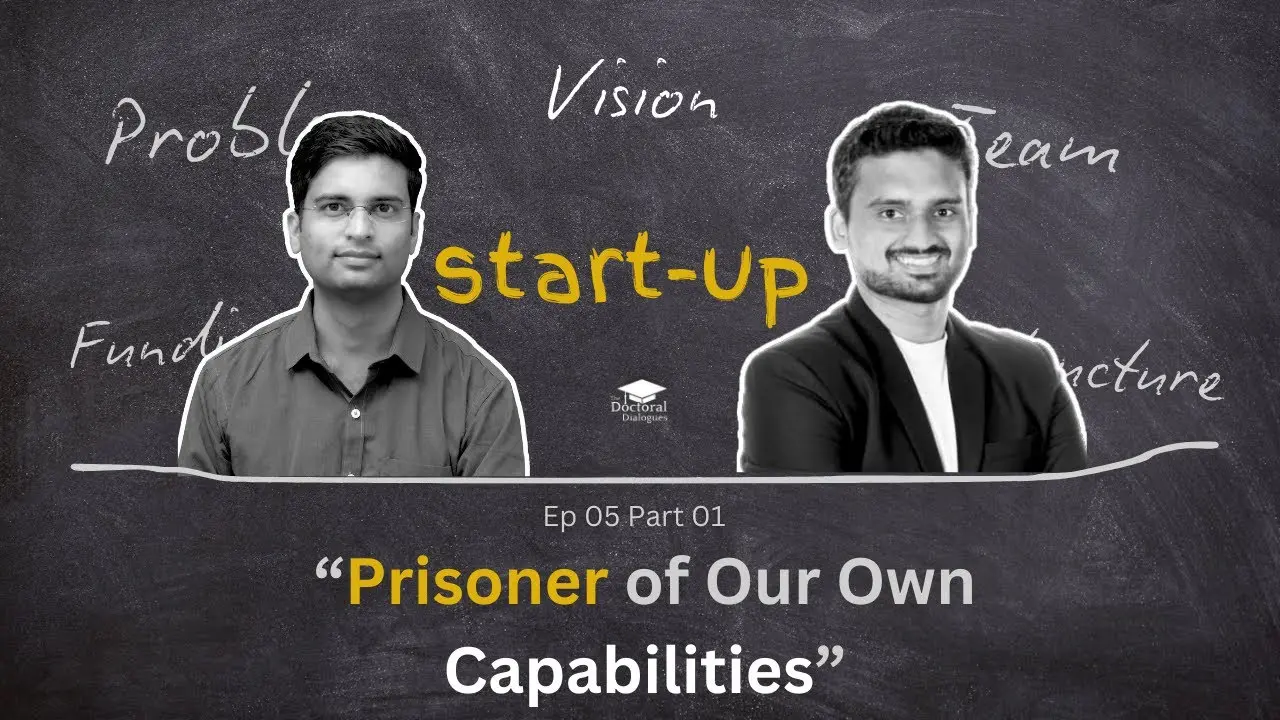
I recently had the opportunity to share my journey on The Doctoral Dialogues (watch here: https://www.youtube.com/watch?v=pM7Io0GWWu4), where we spoke about what it truly takes to build a startup — not from a textbook perspective, but from lived experience.
From pursuing a Master’s in the UK to a PhD in Singapore, and eventually co-founding Zolnoi in Bangalore, my path has been anything but linear. But in hindsight, every step played a role in shaping how I approach problem-solving, technology, and entrepreneurship today.
Here are 5 key lessons from that conversation that I believe every aspiring founder should reflect on:
🧩 1. Your Journey Shapes Your Thinking
Coming from a research background, I was trained to think deeply, question assumptions, and approach problems methodically. While academia and startups are very different environments, the ability to break down complex problems is incredibly transferable.
Startups are essentially a series of unsolved problems — and your thinking framework becomes your biggest asset.
🏗️ 2. Start with a Real Problem (Not Just an Idea)
One of the biggest mistakes early founders make is building without validating.
At Zolnoi, we focused on a very real and pressing problem — energy inefficiency in manufacturing. Instead of jumping straight into building, we spent time understanding:
- What customers actually struggle with
- Where inefficiencies exist
- Whether solving this creates tangible value
A startup succeeds when it solves a painful problem — not just an interesting one.
⚙️ 3. Product-Market Fit is Everything
Building a product is easy. Building the right product is hard.
Early on, we had to continuously iterate:
- Talk to customers
- Refine our offering
- Align features with actual needs
Product-market fit isn’t a milestone — it’s an ongoing process. The closer you stay to your users, the faster you get there.
🧠 4. Technical Leadership Matters Early
As a CTO, one of my biggest learnings was this: clarity of technical direction is critical in the early stages.
You don’t have the luxury of large teams or unlimited resources. Every decision — architecture, tooling, models — has long-term implications.
Strong technical leadership helps:
- Avoid unnecessary complexity
- Build scalable foundations
- Move fast without breaking core systems
In early-stage startups, depth beats breadth.
🔥 5. Mindset is the Real Differentiator
If there’s one thing that defines a founder’s journey, it’s uncertainty.
What helps you navigate it:
- Resilience when things don’t work
- Curiosity to keep learning
- Adaptability to pivot when needed
- Grounded thinking to avoid hype-driven decisions
There are no shortcuts — just consistent iteration and execution.
🎯 Final Thoughts
This conversation wasn’t about “startup hacks” or overnight success. It was about the reality of building something from scratch — the ambiguity, the learning curve, and the small wins that compound over time.
If you’re a student, researcher, or early-career professional thinking about starting up, my biggest advice is simple:
Start with curiosity. Stay close to real problems. And be prepared to learn faster than you ever have before.
Building a startup is not just about creating a company — it’s about evolving yourself in the process. 🚀
Related from the thinking lab
Other things connected by tags — essays, projects, quotes, notes, and collections.